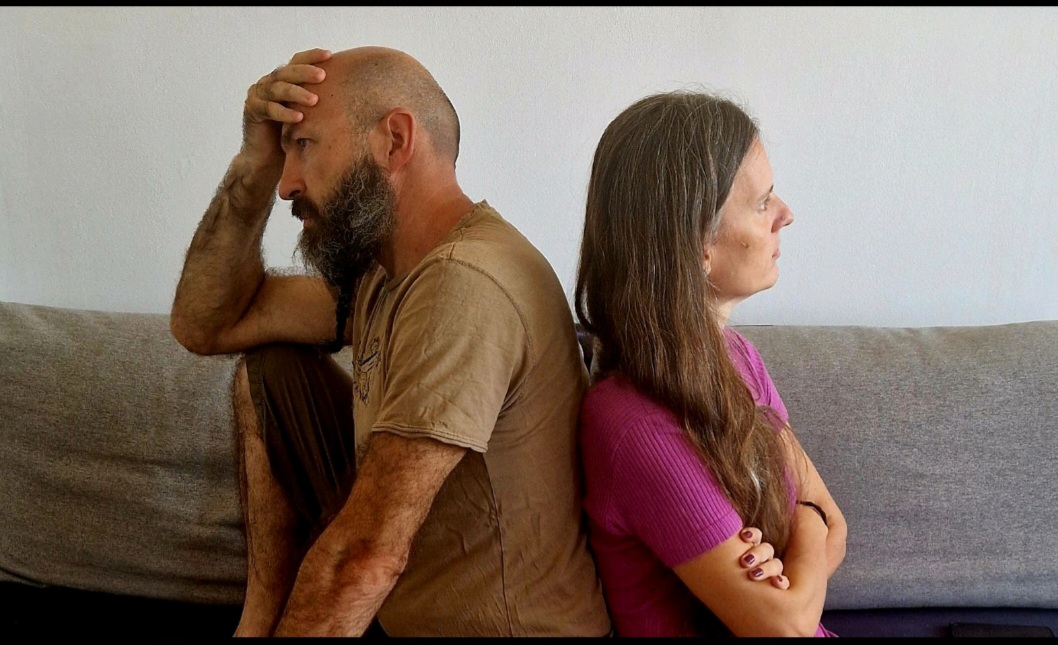
Trust is the foundation of every relationship.
When it is broken by betrayal, the road toward healing is demanding.
Recently I came to a realization that made my stomach tighten. I understood that, with the best intentions, I had recommended a professional to clients and it later turned out that he was an abuser.
I felt guilty for something I had not done myself, and I spent the whole day asking: "Could I have seen it? Am I to blame?"
That is the same mechanism partners go through after betrayal.
In that moment, instead of staying in guilt, I took responsibility for my field.
I asked myself: "What is this situation mirroring back to me? How did my system participate in this?"
That is the same path partners walk after betrayal if they want to truly heal the relationship rather than just patch the wounds.
My apology to the clients who had a bad experience because of my recommendation was my way of clearing the field. Trust is not rebuilt only with words, but with radical truth.
Here are strategies for moving through this delicate journey:
1. Acknowledge and validate emotions
Both partners have to accept the validity of each other's feelings. Betrayal creates a kind of frozen state in the field. Just as I felt immediate paralysis when I heard the truth about a colleague, the betrayed partner feels deep pain. Without acknowledging that pain, nothing can move.
That pain has to be recognized without beautifying it. This is not only an emotional shock, but also a neurological one, and it asks for time and presence.
2. Radical transparency as medicine
If you are wriggling with discomfort when you speak about what happened, the field stays polluted. That does not mean only confessing facts. It means showing your own vulnerability and being willing to stay in contact with your partner's pain without running away from it.
Creating an atmosphere where both partners feel safe enough to express their thoughts is essential. Honesty, even when it hurts, is the only way the ice begins to melt.
3. Setting boundaries from your own authority
Boundaries are not punishment for your partner. They are the fence that protects your new truth. Just as I decided I would not stay silent about my mistake, partners in a relationship also need to establish guidelines that help them feel safe again and prevent future confusion.
Those boundaries exist so that, millimeter by millimeter, you can begin leaning on each other again.
4. Eros as a path toward healing
Research shows that societies that do not repress sexuality tend to have far fewer distortions. The same is true in your relationship. If, after betrayal, you suppress Eros and joy, the relationship will remain lifeless and bitter.
Rebuilding intimacy requires pleasure and excitement to return to the field as something natural, and that process is not easy. It will bring pain, tears, fear, mistrust... but if partners can hold the field for everything that comes, healing will slowly begin to enter every cell of the being.
5. Work on yourself, return to your own responsibility
Instead of the destructive question, "Is this my fault?" which is really looking for punishment, we choose the perspective of responsibility. Our wounds often recognize each other in the field with unsettling precision. Sometimes our nervous system attracts exactly the person who will hit our most painful spot, not to destroy us, but to illuminate what remains unhealed in us.
Taking responsibility means looking at the dynamic that brought us into that relationship and using betrayal as a turning point for our own strengthening.
Rebuilding trust is a journey that changes you
If you want real reconciliation, it has to come from deep responsibility toward yourself and your partner.
If you want to speak your truth and begin melting the ice in your relationship again, I am here to go deeper with you.
I will not withdraw from my work, because I know I help people become stronger in their truth.
You do not need to withdraw from love. You need to strengthen yourself so you can trust your body again, trust your intuition again, and in the end, trust your partner again.
Rebuilding trust is a difficult undertaking, but it is possible. If you want real reconciliation, it has to come from the belly, not only from the head.